
Environmental and Other Impacts of Wind Power
The environmental impacts of wind power are related to noise, landscape changes, flicker from blades and potential harm to wildlife such as birds and fish.
Wind turbines can interfere with radar connections and radio and TV networks. The operation of the electricity grid is affected because wind power generation varies greatly depending on weather conditions. This requires the use of balancing power to compensate for fluctuations in wind power generation.
Wind power construction has many positive effects on the municipal economy, as it provides employment and income for the municipality and its citizens.
The impact of wind power construction is assessed in the context of planning and licensing procedures. In addition, the environmental impacts of major wind power projects are assessed in the EIA procedure. The views of the public and other stakeholders are also taken into account in the impact assessment.
The scope and detail of the issues to be examined will depend on the environmental values and other land uses in the area, the level of planning involved and the scale of the development. The more sensitive the site and the greater the change from the existing situation, the more detailed the studies need to be.
The studies ensure that the planned project or site allocation can be carried out in an environmentally acceptable way and that the solution is otherwise feasible.
Wind Power as Part of the Landscape
The large size of wind turbines means that their visual impact extends over a wide area. There is a potential for competition between the turbine and other landscape elements in terms of scale and symbolism. Therefore, landscape scale, existing landmarks such as church towers and other landscape features are key factors in the siting of wind turbines. Wind turbines are technical structures that create a technical landscape around them.
The clearer and more coherent the overall character of the landscape, the easier it is for new elements to fit in. Small-scale landscapes are generally less tolerant of wind turbine siting than large-scale landscapes.
In open landscapes, such as large areas of arable land, a wind turbine can add variety to the landscape as a tall element, but it can also break up the unity of the landscape. Landscapes with large elements, such as those around industrial and manufacturing plants and ports, can often tolerate the siting of wind turbines.

Wind power is a modern technology. The clearer the temporal link between wind power and its environment, the less conflict there is between them. This is particularly important in the case of landscapes of cultural and historical importance or individual landscape elements. Wind energy development can negate the visual characteristics of a cultural landscape of historic importance and the historic atmosphere of the landscape.
The landscape is considered more tolerant of wind turbines if there are existing man-made structures in the area. The more pristine the environment, the greater the conflict between wind turbines and the landscape. The visual characteristics of a landscape used for recreation and leisure are emphasised. The most economically suitable areas for wind energy are often also used for recreation. This can create problems between the interests of wind energy development and other uses of the area.
In land use planning, it is essential to carry out a case-by-case landscape assessment. Good planning can avoid and prevent negative landscape impacts from wind turbines, and find siting solutions that allow wind turbines to add value to the surrounding landscape.
Maisemavaikutusten arviointi tuulivoimarakentamisessa – Suomen ympäristö 1-2016
Light and Shadows
In the vicinity of a wind turbine, the movement of light and shadows caused by the sun shining from behind the turbine must be taken into account. In this case, the rotation of the rotor blades causes a moving shadow that can extend several hundred metres from the wind turbine. This is called the flicker effect. Flicker usually occurs only at certain times of the day, and only when the sun is shining.
Wind turbines can be programmed to stop at critical times for flashing. Away from the power plants, the critical times are only a few dozen hours per year. In Finland, no limit values or recommendations have been defined for the flicker effect. The guidelines of the Ministry of the Environment recommend the use of recommendations from other countries.
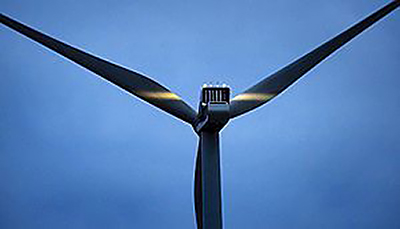
Air traffic lights installed on wind turbines can also be a nuisance to nearby residents. Finnish air safety regulations require all structures over 70 metres in height to have warning lights and those over 150 metres to have separate tower lights. Pre-flight lights on wind turbines ensure that the turbines are visible to pilots even at night. In Finland, the Finnish Transport and Communications Agency (Traficom) is responsible for the requirements for aeronautical beacons.
A relaxation of the rules in 2013 also allows a steady red light at night instead of a flashing bright light. Radar systems have been developed in Europe that would allow lights to remain off until radar detects an aircraft or helicopter. The possibility of testing this system in Finland is being investigated.
Ohje tuulivoimaloiden päivämerkintään, lentoestevaloihin sekä valojen ryhmitykseen – Traficom
Wind Turbine Noise
In Finland, the sound of wind turbines is a relatively new feature of the soundscape, and as wind power construction has increased, the topic has become a topic of much debate.
Noise pollution from wind turbines is caused by the aerodynamic noise of the blades and the noise from individual parts of the generating machinery, such as the gearbox, generator and cooling systems. Of these, aerodynamic noise is the most dominant due to the large area of the blades and the periodic so-called amplitude modulated noise.
The intermittent running noise of a wind turbine is the result of blade rotation and the Doppler effect. This phenomenon causes the aerodynamic sound level to vary with the blade rotation speed. As the blade passes the mast, the aerodynamic noise of the mast blade causes both a reflection of the noise and a new noise due to the compression of the air layer between the blade and the tower. The noise between the mast and the blade is stronger the closer the blade is to the mast.
The characteristics of wind turbine sound, such as intensity, frequency and temporal variation, depend, among other things, on wind speed. Theoretically, the sound intensity attenuates inversely with the square of the distance. However, the noise impact of wind turbines must always be assessed on a case-by-case basis. The intensity and propagation of the sound produced by a turbine is influenced by many factors, such as the type of turbine, wind speed and direction, weather conditions, terrain and vegetation.
Regulating the sound of wind turbines in Finland
In Finland, the permissible sound levels for wind turbines are laid down in the Government Decree on the Guideline Values for the External Sound Level of Wind Turbines (1107/2015), which entered into force in autumn 2015. The regulation’s guide values are applied in land use and construction planning under the Land Use and Building Act and in permitting and monitoring procedures under the Land Use and Building Act and the Environmental Protection Act.
The guide values for wind noise from permanent housing, holiday homes, care facilities and campsites are 45 decibels during the day and 40 decibels at night. For educational establishments and recreational areas, the daytime limit is 45 decibels. National parks are subject to a 40 decibel limit for both day and night time.
A wind farm located on industrial-sized land will typically have a sound level below 40 dB at a distance of 700-1 000 m from the nearest turbine, depending on factors such as the number of turbines, terrain and vegetation. Background wind noise also often exceeds 40 dB(A) when winds are strong enough to cause the wind turbine to operate.
In addition, Finland has guidelines for modelling and measuring the sound levels of wind turbines, which were finalised in 2014 by the Ministry of the Environment. The modelling allows the noise zones and noise levels caused by the operation of wind turbines to be estimated at different points of interest. Sound engineering design is part of the other planning and approval process for wind farms.
Indoor noise levels are regulated by the Ministry of Health’s Decree on Housing Health (545/2015) and also apply to wind power. The regulation applies both during the construction and operation of power plants.
Sound disturbance and effects
As the number and size of wind turbines has increased, concerns about the health effects of wind turbine noise have grown. In October 2014, the Finnish Institute of Occupational Health published the first Finnish-language literature review of foreign research on the health effects of wind turbine noise in residential environments.
Studies show that the sound level of wind turbines is related to noise annoyance, but individual differences in experience are large. No clear link has been found between sleep quality and wind turbine noise levels, but this does not mean that the most sensitive people cannot experience wind turbine noise as disturbing to sleep.
Infrasound as part of wind turbine noise has also raised questions about the impact of wind turbines in the surrounding area. Infrasound is sound with a frequency below 20 hertz (the human hearing range is around 20-20 000 hertz). Infrasound is present everywhere in our environment; it is produced by traffic, wind, vibrations in structures, etc. Wind turbines also produce infrasound, which, according to current research, is generally below the human hearing threshold.
Studies to date on the effects of infrasound have found that only infrasound above the threshold of hearing would have direct health effects. However, concerns about health effects can produce and increase symptomatic experiences.
Elsewhere online:
Wind Turbines and Birds
The impacts of wind farms on birds can be divided into two factors: the risk of collision and the environmental change caused by the construction and its effects on nesting and foraging. These impacts vary according to the size and number of wind turbines, the technical solutions, the geographical location, the topography of the surrounding area and the bird species in the area.
The adverse effects of wind farms on birds can be avoided through good design. One of the criteria for siting wind farms is that they should not be located on the main migratory routes, resting or gathering areas of birds, or in important nesting areas for birds.
In summer 2019, a summary of a Finnish bird survey covering several years was completed. It shows that wind turbines have had little impact on migratory birds and nationally important migratory routes. The monitoring results show that migratory birds tend to avoid wind farms.
Collision risks:
- The size, power and colour of the power plant and its location on land or water do not significantly affect the risk of collision.
- Collisions are greatly increased by the construction of overhead power lines in wind farms. Instead of overhead lines, it is advisable to use land and submarine cables within the area. Illuminating power plants at night with bright floodlights also exposes them to collisions.
- Bird species encounter wind turbines in roughly the same proportion as the number of birds present near the turbine. Compared to buildings and masts, relatively fewer small birds and nocturnal migratory species collide with and die from wind turbines, and more large birds such as birds of prey.
- Although the risk of collision with wind turbines is low (on the order of 1/1000), it is recommended that large migratory bird resting areas (e.g. Liminganlahti) and coastal nodes of high migratory flows (especially Porkkala, Hanko and Pellinki) are avoided as locations for new wind farms.
- The risk of collision is lower in northern Finland than in the south, because the number of breeding and migrating birds decreases towards the north.
- The lowest risk of collision is in the offshore areas of the Bothnian Sea and the Bothnian Sea.
Risks of environmental change
Risk of environmental change refers to the change in bird habitat caused by wind turbines. These changes may extend beyond the breeding area. For example, the feeding area of birds coming from further away may be destroyed. Wind turbines can affect the movement and behaviour of birds. For example, during a feeding or roosting flight, flocks of birds may have to change their flight path.
Wind turbine noise can also pose a risk to birds. For example, a bird nesting near a power plant may not protect itself from an approaching predator if it does not hear the warnings of its species partners.
Elsewhere online:
Underwater Effects
The underwater environmental impacts of offshore wind farms are very similar to those of other structures requiring dredging. The seabed is mainly affected by dredging, foundation construction and the installation of submarine electricity cables. These impacts are generally regional and their intensity depends to a large extent on the type of foundations to be built and the quality of the seabed.
Habitat changes can, among other things, disrupt the reproduction and food supply of fish and seals. On the other hand, structures can also enliven the seabed by providing shelter for fauna and flora.
An offshore wind farm may affect fisheries, as shallow areas suitable for wind farms are often important spawning grounds for fish. Power plants also impose restrictions on offshore movement, which limits, for example, trawling in the vicinity of the plants.
EIA Procedure
The purpose of the environmental impact assessment (EIA) procedure is to ensure that environmental impacts are assessed with sufficient rigour when a project has significant environmental effects. The EIA procedure also aims to increase public participation and influence in the planning of projects. The necessary environmental impact assessments are carried out by the project developer and are supervised and controlled by the ELY Centre, which acts as the contact authority.
A wind power project requires the EIA procedure to be applied whenever the number of individual installations is 10 or more or the total capacity is 45 megawatts or more. The project package is also considered to include the structures necessary for construction, operation and maintenance.
The assessment procedure is also applied in individual cases for projects with less than 10 wind turbines or a total capacity of less than 45 MW, if the environmental impact is likely to be significantly adverse.
Stages of the EIA procedure
In the environmental impact assessment procedure, the project promoter prepares an environmental impact assessment programme and submits it to the contact authority (ELY Centre). The contact authority issues an opinion on the assessment programme, including a summary of the opinions and comments of others.
The project developer will then examine the environmental impact of the project and organise the associated participation on the basis of the EIA programme and the comments received on it. The results will be compiled in an assessment report (EIA report), which will be communicated to the public by the contact authority, including by organising public meetings in cooperation with the project operator.
The environmental impact assessment procedure ends when the contact authority has checked the adequacy and quality of the report and issued a so-called reasoned conclusion. The reasoned conclusion summarises the opinions and comments received. The EIA procedure is open to interested parties.
In wind power projects, where a so-called wind power master plan is drawn up, the EIA project and the planning process go hand in hand, with consultations in the different procedures being combined. In this case, a separate EIA procedure may not be necessary and the plan can be extended to meet the requirements of the EIA law. This not only reduces project costs and speeds up the project’s progress, but above all provides clarity for stakeholders, who can comment on both procedures at the same time.
Tuulivoimarakentamisen suunnittelu – Ympäristöhallinnon ohjeita 5–2016
Tuulivoimahankkeen luvitus Suomessa 5-2019 (Suomen Tuulivoimayhdistys)
Elsewhere online:
Radar Effects
Depending on its location, size and the blade materials used, a wind farm may interfere with radar communications. These include, but are not limited to, maritime, naval or defence radar stations, meteorological automated observation masts and equipment, and weather radars.
The radar link is based on detection and measurement using radio waves, which may be interfered with by the wind farm.
The most typical impacts of wind energy development include the following defence activities in the garrison, depot, training and firing range areas:
- the performance of surveillance and weapon systems (= air and maritime surveillance radars); and
- training of troops and use of systems.
The impact of wind power on monitoring sensors should be clarified well in advance to avoid additional problems and costs. The effects will be assessed by the Defence Forces for each wind power project individually.
Research compensation area
An exception to the radar surveys is the so-called Perämeri wind power area, which does not require a project-specific radar impact assessment. The area was Finland’s first wind power compensation area, established in cooperation with the Defence Forces, the Ministry of Economic Affairs and Employment and the wind power industry.
The Perämeri wind power area covers an area of approximately 2 425 square kilometres in the municipalities of Hailuoto, Lumijoki, Raahe, Siikajoki and Pyhäjoki.
The control system for the compensation area has been developed so that the construction of wind turbines in the area no longer requires separate surveys. A wind energy fee per turbine is collected for wind turbines built in the area. The wind energy levy is €50,000 per turbine.
Effects on the Operation of the Electricity Grid
Wind power generation has increased significantly in the Nordic electricity market in recent years. As renewable energy production fluctuates with weather conditions, the stability of the electricity system is maintained by adjusting other electricity generation capacity or the transfer of electricity from other countries. This is the responsibility of Fingrid, the Finnish grid operator. Fingrid also ensures that the transmission system has sufficient capacity to transport even large amounts of locally produced electricity to where it is needed.
The regulation must work in both directions; the regulating power is the power supplied to or drawn from the grid, the amount of which can be flexibly varied. As technology and the electricity pricing model change, consumers can also play an active role in regulating the electricity system, for example by storing electricity in their electric car battery when electricity prices are low or by limiting their consumption when electricity prices are higher.
The need for balancing power in the power system is constant, but as variable generation increases, so does the amount of regulation in the grid. Finland’s current wind power capacity is well suited to the electricity market without the need for additional regulation.
The grid operator is responsible for connecting wind farms to the grid. The producer must ensure that the technical boundary conditions required for the connection are met and must bear the costs of reinforcing the grid. In the future, the integration of wind power generation into the electricity market will be influenced by the development of other electricity generation capacity, electricity consumption and, very significantly, transmission capacity.
Elsewhere online:
Impact on Radio and TV Networks
The wind farm may cause interference to radio and TV broadcasts and mobile networks in the affected area, among other things. As such, a stationary wind farm will not cause significant interference to radio or TV reception. It is the moving blades of the wind turbine that cause interference. Wind turbines may attenuate the radio signal passing through the wind farm or a high-power radio signal may be reflected from the wind turbine structures and interfere with signal reception.
In Finland, TV broadcasting is mainly provided by Digita, with some other companies holding a network licence in some parts of Finland. The developer of a wind farm should seek the opinion of the local network licence holders on the regional impact of the turbines already at the planning stage and in the impact assessment, in order to minimise the impact.
Once the impacts have been identified, a mitigation plan will be drawn up, if necessary. Possible measures include modernisation of antennas, reorientation and installation of infill transmitters.
According to the Finnish Communications Regulatory Authority, it is important for a wind power developer to inform all known users of radio systems in the vicinity of the construction site. A suitable coordination distance is about 30 kilometres. Users and operators of radio positioning systems and radio links must always be informed, regardless of the distance.
Elsewhere online:
Determining the property tax on a wind turbine (Wind Power Gazette)
Impacts on Municipal Finances
Wind power has many positive effects on the local economy. The property tax paid on the power plants, the land rent and the employment generated by the project generate income for the municipality and its citizens. In addition, a wind farm can generate other economic activities, such as a new type of tourism business.
The property tax for wind turbines is determined on the basis of the general property tax rate and the replacement value of wind turbines (75% of the construction cost of the wind turbine tower, i.e. the foundations, frame and engine room) plus annual age reductions.
The taxable value of the structures of an existing wind turbine is considered to be at least 40% of the replacement value. The property tax rate set by the municipal council varies between 0.6% and 1.35%, with an annual age reduction of 2.5% on the value of the turbine.
For example, the total property tax for a wind farm with 15 wind turbines of three megawatts over a 20-year period could be as high as around €2 million.
The construction of a wind farm requires a relatively large area. Leasing land to a wind energy producer for wind energy production can be a significant additional income for farmers or forest owners, for example.
Wind power employs
The wind power project will employ professionals in various fields during construction and operation. The implementation of the infrastructure supporting the construction and operation of the site alone will have a significant employment impact. In particular, local labour will be used in the construction of the wind farm, especially for earthworks and the concreting of foundations. Most of the direct employment effects of wind power projects occur during the operational phase.
Local labour is often essential, as the need for work can be unpredictable and requires a rapid response. The wind power capacity built in Finland by the end of 2018 (around 2 000 MW) will create around 55 800 person-years of work for Finns over its 20-year lifetime. The direct employment impact of wind power generation is 2 600 person-years, with a multiplier effect of just over 53 000 person-years of employment (Source: Finnish Wind Energy Association).
The domestic content of wind power construction has been quite high. The Ministry of Economic Affairs and Employment surveyed the domestic content of wind power projects in early 2015. For the projects included in the survey, around 59% of the cash flows for wind power production went to domestic economic units.
There are many Finnish technology companies in the sector and, according to a survey by the Ministry of Economic Affairs and Employment, the project developers who have carried out major projects have so far been Finnish, although this may change in the future.
Dismantling and Recycling of Wind Turbines
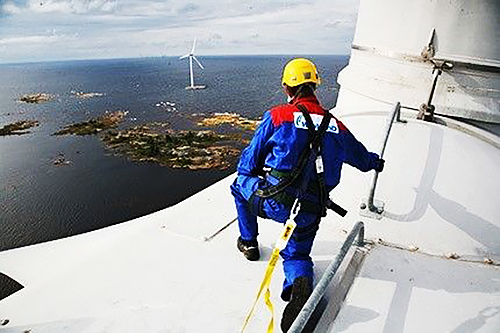
The lifespan of a wind turbine is around 25 years, with the latest turbines lasting up to 30 years. When a wind turbine reaches the end of its lifetime or is dismantled for other reasons, the owner of the turbine is responsible for dismantling it. The landowner and the wind company may agree on issues related to the dismantling of wind turbines, such as a security deposit or a dismantling fund to cover the costs of dismantling, when concluding a land lease agreement.
Decommissioned power plants can be sold on for energy production, and as the completed infrastructure (roads and electricity grid) attracts new players, there is also a secondary market in areas zoned and built for wind power. The licensing of a potential new power plant always starts from scratch.
Wind turbines contain many valuable raw materials, and most of the raw materials used in a wind turbine can be recycled if the turbine is not sold for installation elsewhere. In particular, the recycling rate of valuable metal components (steel, copper, aluminium, lead) in wind turbines is already generally very high, up to almost 100%.
Power plant blades are the most problematic from a recycling point of view, as the fibreglass and epoxy materials used in them are difficult to recycle. Much effort has been put into promoting their recycling and reuse in recent years. Where possible, the foundations of wind farms are left in the ground and landscaped, or the reinforced concrete rubble is partially demolished by blasting and pulverisation.
When dismantling a wind turbine, the possible need for a dismantling permit under the Land Use and Building Act (MRL) must be taken into account, which is mandatory in a zoning area and in a master plan area if the master plan so provides.
It should also be taken into account that the Land Use and Building Act contains provisions on putting the building site and its surroundings in such a condition that it does not endanger safety or degrade the environment if the wind turbine has been abandoned or construction work has been left unfinished (MRL § 170).
In the event of a wind farm’s bankruptcy, the assets will be transferred to the bankruptcy estate.

Milja Aarni
Expert