Home Electricity Use, Electricity Contracts and Smart Electricity Use
How much electricity do you use – and when?
Energy savings begin with knowing your own electricity use: how much you use, when you use it and what it is used for during different seasons, weekdays and times of day.
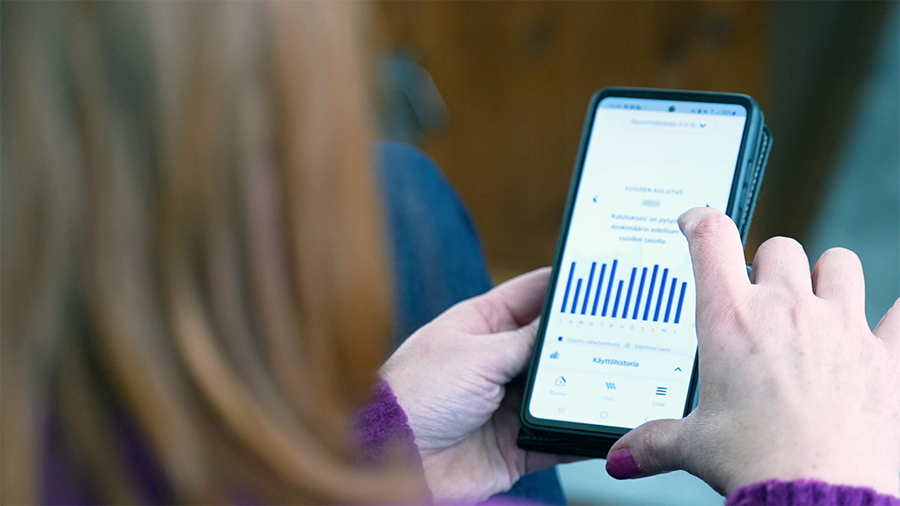
You can view your electricity consumption in 15-minute intervals and identify when usage is highest during the day.
Check your electricity consumption through your distribution network operator’s monitoring service or by logging into Fingrid’s Datahub using Suomi.fi credentials.
If your electricity meter has not yet been updated to 15-minute metering, your hourly consumption is divided into four equal parts. All meters will be updated by the end of 2028.
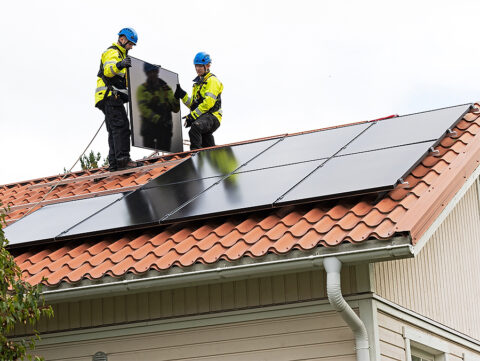
Choosing the right electricity contract affects your costs, but the greatest impact comes from reducing unnecessary electricity use and using electricity at the right time. You can also reduce the amount of electricity you buy by producing your own energy, for example with solar panels.
What affects electricity use?
Electricity consumption depends on your home, equipment and usage habits.
The use of electrical appliances – such as lighting, cooking, refrigeration and consumer electronics – typically accounts for 1,000 to several thousand kilowatt-hours per year, depending on the size of the household and the level of equipment.
If space heating and domestic hot water are powered by electricity, annual consumption can rise to tens of thousands of kilowatt-hours. The wide variation depends on the size and condition of the building. Older, unrenovated electrically heated houses are often less energy efficient, and older technology consumes more electricity than modern, energy-efficient systems.
In homes and housing companies, a significant share of electricity use can be shifted to different times without affecting everyday comfort.
Example of electricity consumption breakdown in an apartment building
Apartmen size 50m2, district heating, 1 resident, total consumption 3 100 kWh/year
| Bathroom underfloor heating | 1 100 kWh |
| Laundry | 200 kWh |
| Dishwashing | 140 kWh |
| Refrigeration | 300 kWh |
| Cooking | 250 kWh |
| Lighting | 240 kWh |
| Entertainment equipment | 400 kWh |
| Electric stove | 350 kWh |
| Other | 120 kWh |
Example of electricity consumption breakdown in a detached house
Detached house 120m2, electric heating, 4 residents, total consumption 19 200 kWh/year (excluding electric vehicle charging)
| Heating | 9 500 kWh |
| Warm water | 3 670 kWh |
| Laundry and drying | 700 kWh |
| Dishwashing | 300 kWh |
| Refrigeration | 600 kWh |
| Cooking | 680 kWh |
| Lighting | 450 kWh |
| Entertainment equipment | 700 kWh |
| Electric stove | 1 000 kWh |
| Technical equipment, ventilation | 800 kWh |
| Other | 400 kWh |
| Car heating | 400 kWh |
| + Electric car charging | 2 400 kWh |
Read more about the opportunities different types of buildings offer for reducing electricity use and lowering your electricity bill at the same time.
Electric heating
If your home uses electricity for space heating or domestic hot water, heating has the biggest impact on your electricity bill.
- Lowering the indoor temperature by one degree can reduce heating electricity use by about 5%.
- Temperatures can be lowered further in unused rooms.
- In electrically heated homes, reducing hot water use directly lowers electricity costs.
- Direct electric heating can be made more efficient by using an air-source heat pump alongside it.
- If your home has a water-based heat distribution system, switching to a heat pump solution can significantly reduce electricity consumption.
- Savings are greatest during cold weather, when electricity use is highest.
Timing your electricity use
Electricity prices vary every 15 minutes based on supply and demand.
- Shifting electricity use to cheaper periods lowers your electricity bill.
- The more electricity you use, the more you can benefit from timing it wisely.
- Timing works best when high-consumption devices can be controlled automatically.
Explore the opportunities for timing your electricity use if your home has any of the following systems:
- Electric domestic hot water heating
- Electric radiators, electric underfloor heating or an electric boiler
- Electric comfort underfloor heating in the bathroom
- A heat pump
- Electric vehicle charging
- Mechanical ventilation and cooling
- Solar panels and/or a battery storage system
- An electric sauna heater or other high electricity-consuming appliance
Solutions for controlling electricity use
There are several options for controlling electricity use. Control can be applied to a single device, or a more comprehensive home automation system can manage electricity use, appliances, lighting and security systems remotely. You can also outsource control to an external service provider.
Built-in timers and control features in devices
- Check the quick guide or user manual if you are not yet familiar with the device’s features. You can often find the relevant settings by browsing the control menu.
- Newer building systems often support spot price-based control. By choosing a spot-price electricity contract and setting suitable price and time limits, you can benefit financially from automatic control. This works via a Wi-Fi or fixed internet connection.
Relays, timers and smart controllers
- Upgrade building systems with controllable relays or timer switches.
- Plug-and-play options include smart thermostats, smart plugs and smart controllers for air-source heat pumps.
- In most cases, you may also install a device connected to the electricity meter’s HAN port (data communication port) that reads metering and control data. The reader can be connected to your home Wi-Fi network, allowing meter data to be used in home automation to control devices. Activation of the HAN port may be required – check with your distribution network operator’s customer service.
Electricity use control as a service
- Sign an agreement with an external service provider for electricity use control.
- Control is implemented by installing a remotely operated control unit on the device. The unit receives electricity price data or control signals from the service provider and adjusts the device’s electricity use accordingly.
- These services are particularly suitable for those who want flexibility but prefer not to manually adjust devices or monitor price fluctuations.
- Your distribution network operator may offer a control service, for example for a domestic hot water tank or electric heating. Installation requires a licensed electrician, who will install the necessary relay or contactor in the electrical panel and connect the device group to the control system.
- Electricity meters equipped with a load control relay already have the required technology, but all necessary connections must be carried out by a licensed electrician to ensure safe installation.
Home automation
- Home automation brings together the home’s devices and systems into a user-friendly control system where temperature, ventilation, lighting and other functions automatically adapt to daily needs.
- The system maintains living comfort, optimises energy use and reduces unnecessary consumption in the background, without requiring the user to monitor devices or electricity prices. When heating, domestic hot water and other major loads are automatically shifted to cheaper periods, home automation provides an efficient and effortless way to participate in demand response.
- When investing in home automation, it is advisable to consider potential future expansion and compatibility between different functions.
Which electricity contract works best if you time your electricity use?
The type of electricity contract affects how much financial benefit you can gain from timing your electricity use.
- Spot-price contracts: The price varies in 15-minute intervals, and demand response can bring significant savings if devices can be automatically shifted to the cheapest periods.
- Flexible contracts (consumption-based or hybrid contracts): The price effect is reflected in your bill on a monthly basis. The more your electricity use is shifted to periods below the average price, the lower your bill will be. In this type of contract, the financial benefit from demand response is usually smaller than with a spot-price contract.
- Fixed-price contracts: Timing your electricity use does not provide financial benefits in the same way as with variable-price contracts. An exception may apply if your distribution network operator uses a capacity charge and your peak demand affects the distribution fee. In such cases, staggering and timing the use of high-power appliances can reduce costs, regardless of the contract type.
Electricity use in an apartments and housing companies
In an apartment building, a household’s electricity use typically consists of cooking, refrigeration, household appliances and consumer electronics. In most housing companies, space heating and domestic hot water are included in the maintenance charge or rent. Electric comfort underfloor heating in the bathroom and the use of an electric sauna can create temporary peaks in electricity consumption.
- An exception is electrically heated apartment buildings, where individual apartments use electric radiators or electric underfloor heating. In these cases, space heating and domestic hot water are the responsibility of the resident, who can directly influence heating costs.
Building electricity (common electricity use)
The housing company also has its own electricity contract, as it is responsible for electricity used in common areas. This includes lighting and ventilation in shared spaces, as well as electricity consumption for saunas, lifts, laundry rooms, cold storage rooms and car heating posts. With demand-based control, the housing company can also reduce its electricity costs.
Electricity use always has an environmental impact
The production, transmission and use of energy have climate and environmental impacts. By taking care of energy efficiency in your home, you ensure that energy is not wasted unnecessarily.
Choose electricity produced from renewable energy sources to reduce your climate impact. When energy has a guarantee of origin, it is guaranteed to be produced from renewable energy.