
Exhaust Air Heat Pump
A forced air heat pump collects heating energy from the air leaving the house through the ventilation duct. The pump transfers the heat to the supply air, domestic hot water or the water heating system, depending on the current demand.
Exhaust air heat pump works best in a low-heat network, such as with underfloor heating. An exhaust air heat pump requires an exhaust air duct or supply/exhaust air exchange duct to operate. Depending on the model, an exhaust air heat pump can often also be used to cool the indoor air.
The purchase of an exhaust air heat pump is most cost-effective when the internal volume is large in relation to the heating demand. Therefore, an exhaust air heat pump is a natural choice for low-energy or passive renewal buildings, as these do not require a large amount of energy per year to heat the space.
In addition to heating the house, the exhaust air heat pump also provides ventilation and requires at least an exhaust air duct and sufficient air flow to function. Ventilation can also be implemented as a supply-exhaust ventilation system. The size of the air volumes should be taken into account in the design phase when sizing the heat pump.
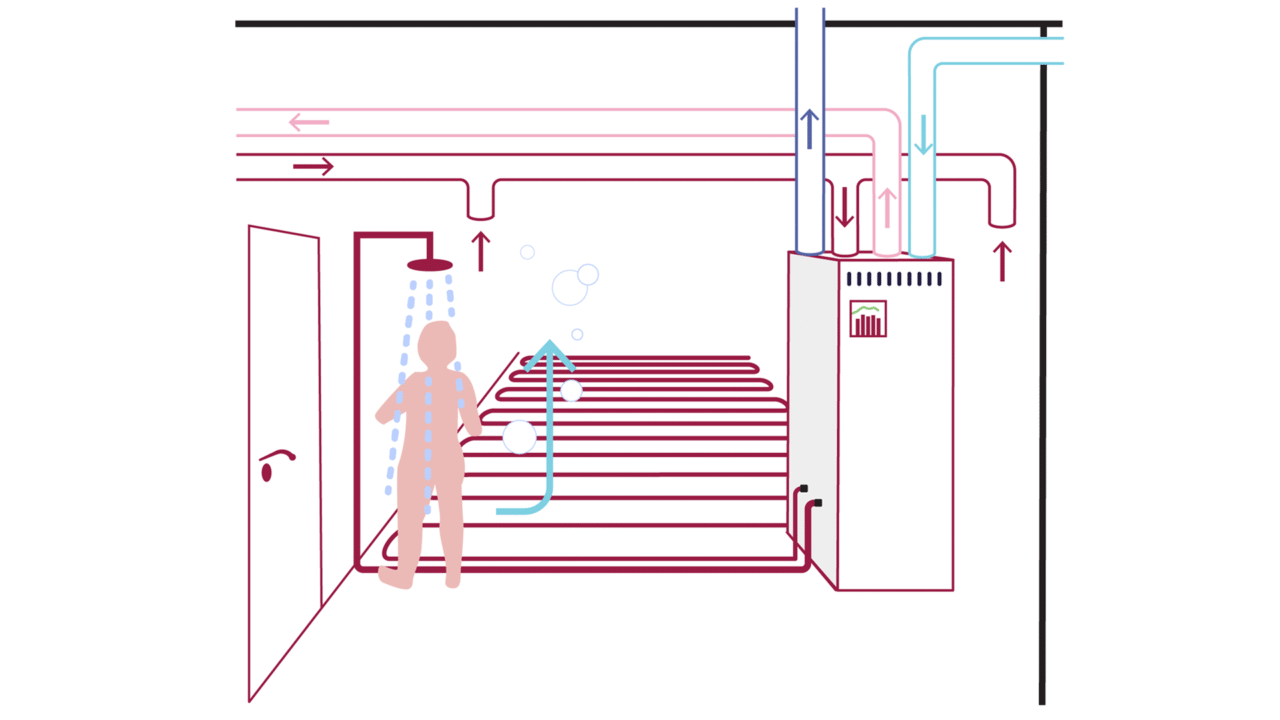
Use of an exhaust air heat pump
An exhaust air heat pump cannot usually provide all the heating energy needed for a house throughout the heating season. When the heating demand exceeds the heat output of the Exhaust air heat pump, the rest of the required heating energy is usually produced by the Exhaust air heat pumps internal electrical resistors. Additional space heating can also be provided by other heating methods, such as air source heat pumps. According to the model, some Exhaust air heat pumps produce domestic hot water and supply air heating with compressor output, so that the heating network heat is produced solely by electric resistors. The burning of wood, especially in frosty periods, reduces the amount of electrical energy to be purchased.
As the heat source is always the 21-25 degree indoor air that is exhausted from the house, the exhaust air heat pump produces heat at almost constant efficiency all year round. During the summer period, and due to different heat loads, the extract air temperature is slightly higher in summer and spring than in winter. The more electrical appliances, lights and people in the house, the better the energy recovery. In other words, if a house is unoccupied for a couple of weeks during winter frosts, more extra heat is needed.
The temperature of the air leaving the house after the waste air, i.e. the heat pump, indicates how much energy can be recovered from the exhaust air. The colder the temperature of the waste air, the more heat has been recovered. Today, new equipment can reach temperatures as low as -15°C for waste air.
The exhaust air heat pump also replaces the ventilation unit and, like the ventilation unit, removes air from damp areas of the house. In a house with an exhaust air heat pump, there is no need for a separate ventilation unit or heat recovery unit.